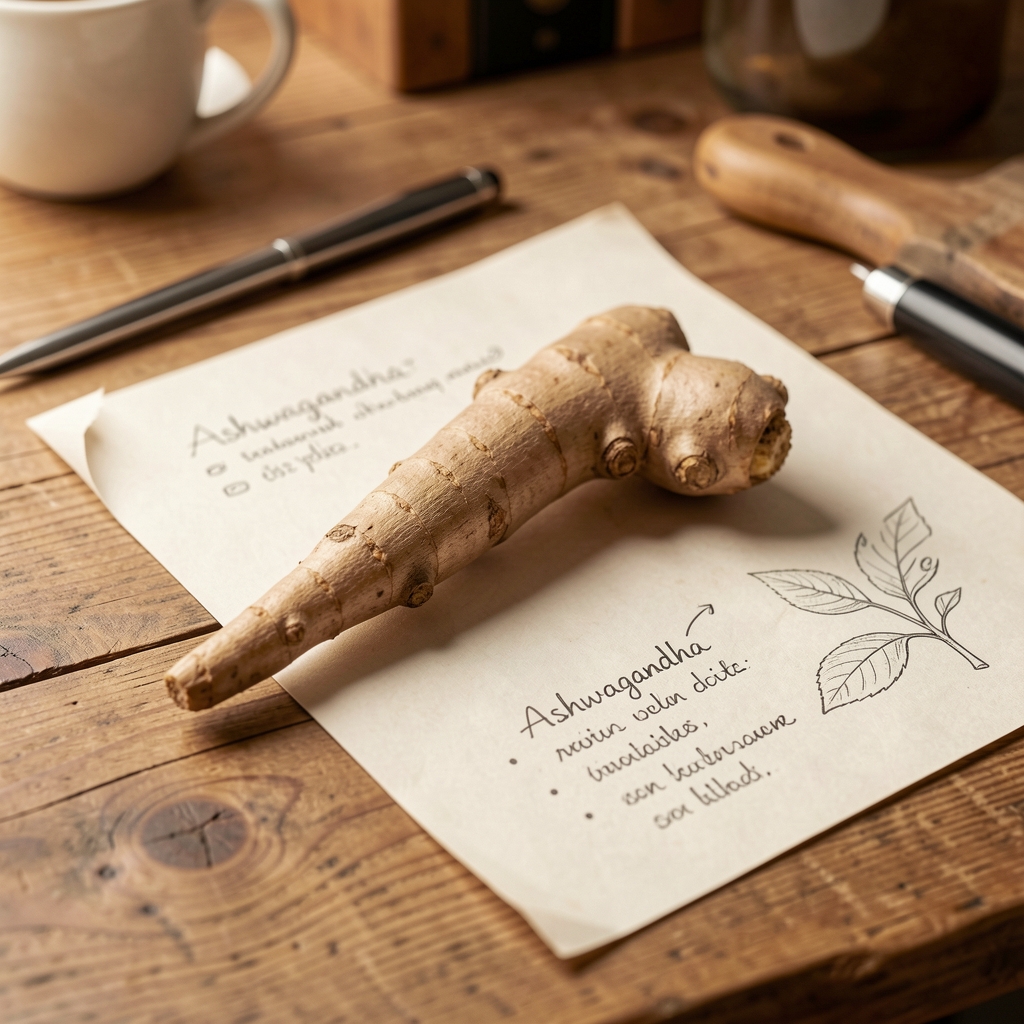
Ashwagandha is a botanical ingredient discussed in modern wellness writing and traditional systems of knowledge. After 40, readers may encounter it in powders, extracts and blended products alongside broad language about stress, sleep and hormones. This review focuses on how to read that conversation responsibly. It considers terminology, study design, product variation and the importance of personal context. A plant name does not tell a reader everything about preparation, amount or quality. Nor can one study settle every question. The most useful article is one that makes those limits visible and gives readers a calm framework for further discussion.
Names and preparations
Different products may use different extracts and labels. These distinctions matter when comparing research with a shop description. A paper may study a specific preparation that is not identical to every product on the market.
Reading the evidence
Look for participant details, study duration, comparison groups and the outcomes measured. Small studies can be interesting while still leaving questions open. Reviews can offer perspective, but their conclusions depend on the material included.
Personal context
Food supplements may not suit everyone. Existing health circumstances, regular medicines and planned changes are appropriate subjects for a professional conversation. A general article cannot identify what is right for one person.
Questions for a careful reader
- What preparation does the research describe?
- How long did the study run?
- Were outcomes self-reported or measured another way?
- What uncertainties remain?
Key takeaways
- Botanical labels can hide meaningful differences.
- Research context is essential.
- Personal circumstances should guide personal decisions.