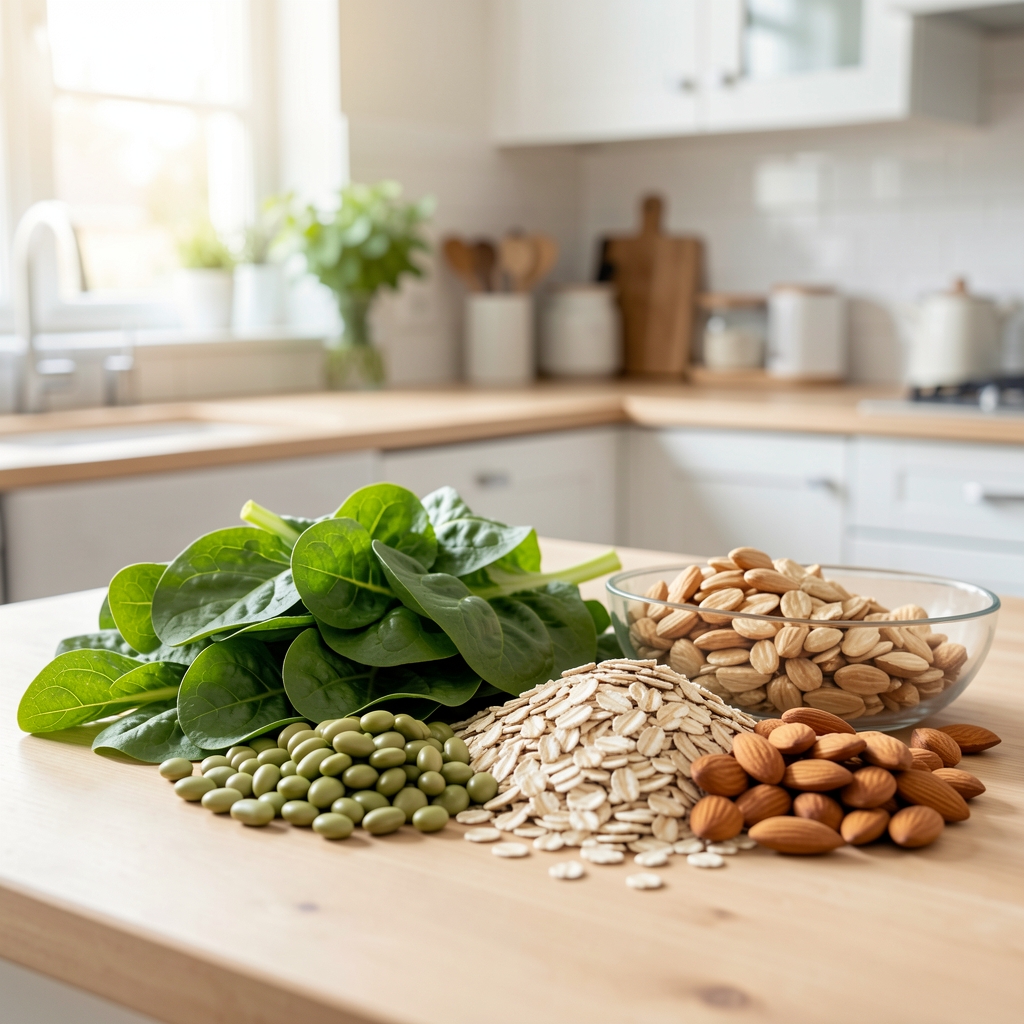
Magnesium is a mineral found in leafy greens, beans, nuts, seeds and wholegrains. It is part of many ordinary processes, which makes it an interesting subject for adults thinking about nutrition after 40. Online discussion can make the topic sound simpler than it is. This guide sets out what the mineral is, where it appears in food and how to interpret research about magnesium and hormonal wellness. It keeps the focus on information, not promises. Dietary pattern, portion size, preparation, individual context and the quality of a study all shape what a reader can reasonably take from an article. The most responsible interpretation is usually measured and specific.
Magnesium in everyday food
Oats, spinach, beans, almonds, cashews, pumpkin seeds and dark chocolate are familiar sources. A varied plate can contribute magnesium while also adding fibre and other nutrients. Food labels and national nutrition resources are useful companions to a general article.
Fatigue language and approved wording
Magnesium contributes to the reduction of tiredness and fatigue. This refers to the individual nutrient, not to any specific product. The wording describes a permitted nutrient claim; it does not describe every person’s experience or guarantee a personal result.

How studies differ
Some research examines dietary intake, some examines blood measures and some studies a particular population. These approaches answer different questions. Duration and sample size also affect interpretation. A headline may omit those details, so a careful reader should look further.
Routine and context
Meal timing, hydration, sleep and movement sit around nutrition. A person can note routines for a short period to identify useful questions, without assuming that every daily variation has one explanation.
Practical reading prompts
- Which foods already appear regularly?
- What does the study actually measure?
- Is the population similar to the reader?
- Would a professional conversation add useful context?
Key takeaways
- Magnesium is widely available in varied foods.
- Permitted nutrient wording has a defined scope.
- Study design changes what a result can mean.
- Personal decisions deserve personal context.